
Introduction
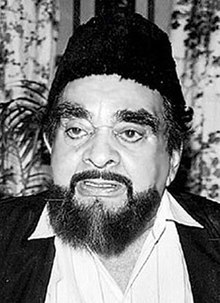
Mukri, a name that may not be as towering as some of the giants in Hindi cinema in terms of physical stature, but when it comes to talent and comedic brilliance, he was second to none. This diminutive artist, standing at just 5 feet tall, brought smiles and laughter to audiences in nearly 600 films over his illustrious career that spanned six decades. In this article, we delve into the life and career of Mukri, exploring his early years, his journey into the world of cinema, and his lasting impact on Bollywood.
Early Life and Education
Originally named Mohammad Omar Mukri, was born on January 5, 1922, in Uran, Raigarh district of Maharashtra. He hailed from a conservative Konkani Muslim family with roots tracing back to Afghanistan. His father, Hisamuddin Umar Mukri, was a Quran teacher, and his mother, Amina Begum, was a homemaker. In his early years, no one could have foreseen that Mukri would later emerge as one of the most beloved comedians in Indian cinema.
Mukri’s journey towards the world of entertainment began during his school days. He developed a keen interest in acting while attending Anjuman Islam School in Mumbai. It was at this very school that he crossed paths with a young Yusuf Khan, who would later be known as the legendary Dilip Kumar. Mukri and Dilip Kumar’s friendship blossomed during these formative years.
Mukri’s Personal Life
Personal life was marked by an arranged marriage to Mumtaz in 1950. The couple had five children—three sons, Nasir, Bilal, and Farooq, and two daughters, Naseem and Ameena. While Nasir ventured into supporting roles in films and worked as an assistant director, Farooq also made an appearance in the film “Dil Aur Patthar.” However, information about Bilal’s career remains undisclosed.
Mukri’s daughters also harboured aspirations in the film industry. Naseem started as a child artist and made a cameo appearance in the film “Dhadkan,” where she also contributed to writing dialogues. She went on to write dialogues for other films and television serials.
The Theatrical Beginning
Mukri’s initial foray into acting occurred when he was cast in a school play at Anjuman High School. His talent shone brightly as he portrayed the character of Khan Bahadur, earning him the prestigious Best Actor Award at the school. This early recognition fueled his determination to pursue a career in acting, despite the reservations of his family.
The Film Industry Beckons
After completing their education, He and Dilip Kumar were resolute in their desire to enter the film industry, but they were well aware of the challenges they would face in convincing their families. Nevertheless, their shared dream of making it in the movies pushed them forward.
Mukri briefly took on the role of a Qazi and taught the Quran to children in a madrasa. However, this did not fulfil his passion for acting, and he later secured a government job. It was during this time, in the backdrop of World War II, that Mukri found himself going door-to-door, urging people to hang black curtains.
Fate intervened when Mukri reunited with Dilip Kumar at a mosque. Sharing his aspirations, Mukri received support from his friend, who managed to get him to work as an assistant director under renowned filmmakers like Mehboob Khan and K. Asif.
The Bombay Talkies Breakthrough
Mukri’s big break came when Dilip Kumar joined Devika Rani’s production house, Bombay Talkies. Dilip Kumar’s introduction of Mukri to Devika Rani left a lasting impression, thanks to Mukri’s infectious smile and charismatic style. Thus, in 1945, Mukri realized his dream by appearing in the film “Pratima,” which was Bombay Talkies’ second production, following “Jwar Bhata” in which Dilip Kumar was launched as a hero in 1944.
This marked the beginning of Mukri’s journey in the world of cinema, where he would go on to work alongside not only Dilip Kumar but also other iconic stars of the era, including Dev Anand, Raj Kapoor, Rajendra Kumar, and Sunil Dutt.
The Comedy Icon
Mukri’s comedic genius was the highlight of numerous films. His impeccable timing and infectious laughter made him an indispensable part of Bollywood. He effortlessly transitioned from the old era to the new, forging successful partnerships with contemporary superstars like Dharmendra and Amitabh Bachchan.
In 1977, he achieved particular acclaim for his role as Tayyab Ali in the film “Amar, Akbar, Anthony.” His portrayal of Nathulal in the 1984 movie “Sharabi” also earned him praise and is fondly remembered by fans to this day.
A Prolific Career
His name stands among the luminaries of Hindi cinema with exceptionally long film careers. He graced nearly 600 films, a remarkable feat that places him in esteemed company alongside actors like Shakti Kapoor and Lalita Pawar. His final film, “Betaaj Badshah,” was released in 1994, where he played the role of the principal.
Venturing into Television
While he was predominantly known for his work in Hindi films, he also made a mark on the small screen. He appeared in the TV serial “Bheem Bhavani,” which aired on Doordarshan in 1990. This show featured several veteran artists, including Ashok Kumar, Utpal Dutt, Tuntun, Jagdeep, Rajendra Nath, and Mehmood.
Declining Offers
In the latter part of his career, Mukri’s health began to decline. Despite offers from notable figures in the industry, he chose to step back from projects, including an offer from Ekta Kapoor’s TV show. He declined, expressing his concern that his health might hinder the success of the project.
Legacy and Lasting Impact
In his final years, Mukri expressed disappointment with the state of comedy in Bollywood, feeling that comedians were not receiving the recognition they deserved. Nevertheless, his contributions to the world of Indian cinema remain etched in the memories of countless fans. His iconic roles, infectious laughter, and impeccable timing ensured his place as a comedy legend.
The End of an Era
Mukri passed away on September 4, 2000, at the age of 78, at Lilavati Hospital in Mumbai, succumbing to heart failure and kidney issues. During his final moments, he was accompanied by his close friend Dilip Kumar and Kumar’s wife, Saira Banu. He was laid to rest in Mumbai.
Conclusion
Mukri‘s journey from a humble schoolboy to a beloved comedy legend of Hindi cinema is a testament to his talent, determination, and enduring passion for acting. His ability to bring laughter and joy to audiences for six decades is a legacy that will continue to inspire generations of comedians and film enthusiasts


0 Comments